
Job Site Ready Picks
Construction work demands a used truck that can carry heavy tools, tow equipment trailers, and stay dependable through long, messy days. This guide highlights the best used trucks for construction workers and explains the features, trims, and specs that matter most on real job sites. From half ton daily drivers to three quarter ton and one ton haulers, find out which models, years, and configurations deliver reliable payload, stable towing, and rugged durability without overspending.
You will also learn how to evaluate frame condition, rust points, maintenance records, and must have options like locking differentials, skid plates, and upfitter switches. For buyers comparing gas and diesel, we break down long term costs and ideal use cases. When you are ready to dig deeper, explore related resources like used inventory, pricing research, and ownership tips in the helpful links below, including used-inventory, best-used-trucks-for-work, most-reliable-used-trucks, and used-car-buying-checklist.
The right work truck balances payload, towing, traction, and interior practicality. This page covers proven used models such as Ford F-150 and Super Duty, Chevrolet Silverado and 2500HD, Ram 1500 and 2500, Toyota Tundra, and GMC Sierra. Compare regular cab, extended cab, and crew cab layouts, choose the correct bed length, and learn which equipment packages and model years are known for job site toughness and lower total cost of ownership.
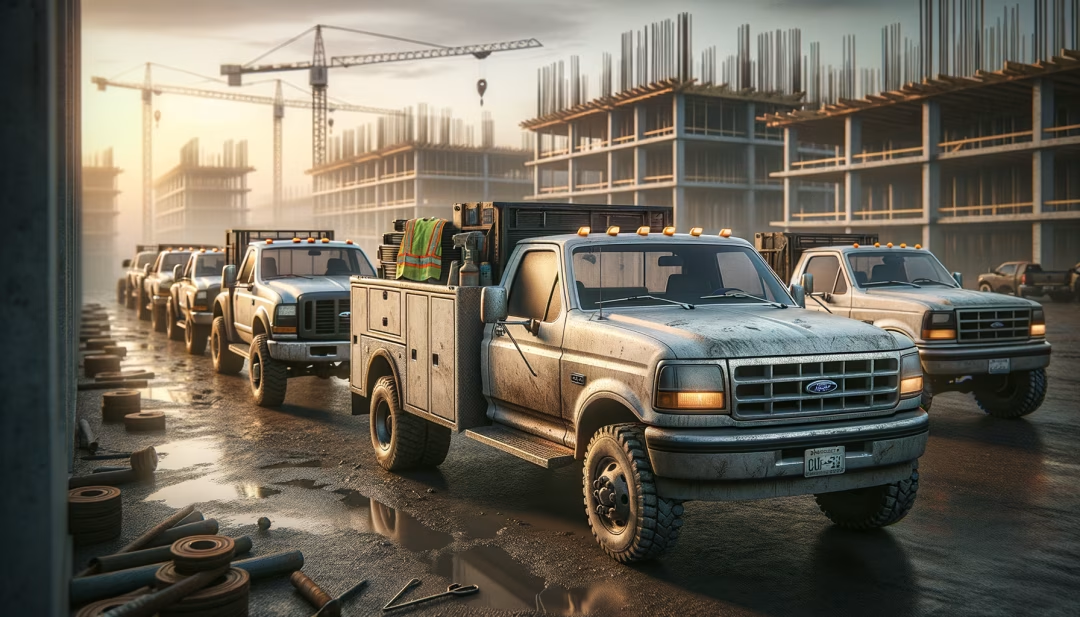
What makes a great construction work truck
A reliable construction truck is more than a big engine. It should combine usable payload capacity, confident towing stability, durable suspensions, and an interior that stands up to mud, dust, and daily wear. The best picks also offer modern safety tech such as blind spot monitoring with trailer coverage, a backup or 360 camera to navigate tight sites, and integrated trailer brake controllers. Smart storage and bed protection help keep tools organized and secure while minimizing downtime.
- Payload and GVWR matched to your tools and materials
- Tow rating and cooling packages for loaded trailers and equipment
- 4x4 with low range, locking or limited slip differentials, and skid plates
- Durable vinyl or heavy duty cloth, rubber floors, easy to clean surfaces
- Bed liner, tie downs, ladder rack, toolbox, and bed lighting
Half ton vs three quarter ton vs one ton
Half ton trucks like Ford F 150, Chevrolet Silverado 1500, GMC Sierra 1500, Ram 1500, Toyota Tundra, and Nissan Titan work well for lighter loads, mixed driving, and urban job sites. For heavier palletized materials, compact equipment trailers, or frequent towing, a three quarter ton 2500 class offers stiffer frames, stronger axles, and larger brakes. One ton trucks with dual rear wheels excel when maximum payload, gooseneck, or fifth wheel towing is routine. Choosing correctly prevents brake fade, sagging suspensions, and premature wear.
- Half ton - versatile daily use, moderate payload and towing, better mpg
- Three quarter ton - heavy duty frames and axles for frequent heavy loads
- One ton - maximum payload and towing stability, often with dually rear axles
Gas vs diesel for construction workers
Gas engines are generally cheaper to buy and maintain, warm up faster in cold weather, and work well for mixed driving and lighter trailers. Diesel engines deliver higher torque at low rpm, better fuel economy under load, and longer engine life if maintained on schedule. If your week is filled with loaded towing or mountain routes, diesel can pay off. For local site runs, stop and go traffic, and occasional towing, a strong gas V8 or turbo V6 is often the most cost effective.
- Choose diesel for frequent heavy towing, long highway pulls, and torque dependent tools
- Choose gas for lower upfront cost, simpler upkeep, and mostly local routes
Best used trucks for construction workers - model highlights
The following used trucks have strong reputations on job sites. Availability and specs vary by year and trim. Always verify exact payload and tow ratings for the VIN and configuration.
- Ford F 150 - Wide trim and engine choices. Look for 5.0L V8 or 3.5L EcoBoost for balanced power. FX4 or Tremor off road packages add skid plates and locking features. Consider models with integrated trailer brake controller and Pro Trailer Backup Assist.
- Ford F 250 and F 350 Super Duty - Excellent for heavy loads. Popular 6.2L gas V8 and 7.3L gas Godzilla, or the 6.7L Power Stroke diesel for maximum torque. Upfitter switches, snow plow prep, and camper packages are job site friendly.
- Chevrolet Silverado 1500 and 2500HD - Strong frames and towing manners. 5.3L and 6.2L gas V8s are common. Duramax diesel with Allison transmission is highly regarded for heavy towing. Look for Z71 off road, trailering package, and bed utility features.
- GMC Sierra 1500 and 2500HD - Similar strengths to Silverado with upscale interiors in many trims. AT4 and All Terrain packages add ground clearance and off road hardware useful on muddy sites.
- Ram 1500 and 2500 - Smooth ride with coil spring or air suspension options. Hemi V8s offer reliable power. Cummins diesel in 2500 models is a towing favorite. Tradesman and Big Horn trims are common in work fleets with vinyl flooring and easy clean seating.
- Toyota Tundra - Longstanding reputation for durability. Strong V8 power, straightforward maintenance, and high owner satisfaction. Good pick for crews that prioritize reliability over maximum tow ratings.
- Nissan Titan XD - Sits between half ton and three quarter ton for extra chassis strength. Some years feature a Cummins diesel option. Useful for teams that need a stout platform without moving to a full HD truck.
Cab and bed configurations that work on site
Crew cab trucks provide the most interior room for teams and secure tool storage. Extended cab models save money and weight if you only carry one or two passengers. Regular cabs maximize bed length on a shorter overall chassis, which is handy for tight jobsites or when hauling long materials. Match bed length to your work. A 6.5 foot bed balances cargo length with maneuverability. An 8 foot bed handles sheet goods and lumber without hanging over the tailgate.
- Crew cab for people and lockable interior storage
- Extended cab to save budget and curb weight while keeping jump seats
- 8 foot bed for full length materials and job boxes
Must have features and packages for construction duty
Certain options dramatically improve job site performance, safety, and durability. If you regularly pull heavy trailers, prioritize factory tow packages, integrated brake controllers, and extendable tow mirrors. For rough terrain, seek 4x4 with low range, locking or limited slip differentials, skid plates, and all terrain tires. Protect the bed with a spray in liner, add tie downs and rails, and consider a ladder rack or cross bed toolbox. Vinyl floors and durable seat materials clean up faster after muddy days.
- Tow package with hitch, wiring, transmission cooler, and brake controller
- Locking rear differential or selectable locker for traction in mud and gravel
- Skid plates, recovery hooks, and all terrain tires for unpaved access roads
- Spray in bedliner, cargo lighting, tie downs, and ladder rack compatibility
- Upfitter switches for light bars, compressors, and auxiliary equipment
Recommended model years and budgeting tips
Value peaks where modern safety features meet proven reliability. Many buyers find strong options in 5 to 10 year old trucks with detailed service records. If you are targeting a set budget, explore best-used-trucks-under-20000 and pair that with a careful inspection. Former fleet trucks can be a smart choice if maintenance logs are consistent. Avoid lifted suspensions or oversized tires unless there is documentation that gearing and brakes were upgraded accordingly.
Beyond price, evaluate total cost of ownership. Insurance, fuel, tires, brakes, fluids, and possible injector or emissions service on diesel models should be part of the plan. To compare ownership details, see used-cars-with-lowest-cost-of-ownership and used-vehicles-with-best-warranty-coverage. If you need financing insights, review how-to-finance-a-used-car and applications to understand approval steps and documentation.
Inspection checklist for construction use
Heavy workloads accelerate wear. A thorough inspection reduces surprises. Frame rust around cab mounts and rear spring hangers is a red flag. Check bed crossmembers and tailgate cables. Inspect the hitch receiver for distortion, wiring for splices, and evidence of consistent trailer use. Look for fluid leaks, coolant condition, belt and hose wear, and signs of overheating. On a test drive, monitor transmission shifts under load and braking stability with repeated stops.
- Frame and underbody rust, especially in salt states and coastal regions
- Tow package integrity, hitch, 7 pin connector, trailer brake controller function
- Differential and transfer case leaks, U joints, and driveshaft play
- Suspension bushings, ball joints, tie rods, and shock or strut condition
- Tire load ratings, even wear, and adequate tread for muddy access roads
For a simple step by step process, reference used-car-buying-checklist and used-car-inspection-checklist. A pre purchase inspection from an independent shop or through schedule-service can add peace of mind.
Ownership, maintenance, and protection
Construction duty is tough on brakes, fluids, and filters. Follow severe service intervals and consider upgraded pads and rotors for frequent towing. Protect the bed and cab with heavy duty mats and seat covers. Rustproofing, especially inside rocker panels and frame rails, helps in wet or salted climates. An extended service contract may make sense if you log high annual miles. Learn more in used-car-warranty-guide and used-vehicles-with-best-warranty-coverage.
Helpful links and related research
- used-inventory
- best-used-trucks-for-work
- most-reliable-used-trucks
- best-used-trucks-under-20000
- used-car-buying-checklist
- used-car-inspection-checklist
- how-to-finance-a-used-car
- applications
- used-car-warranty-guide
- schedule-service
- best-used-vehicles-for-towing
- about-us | blog | contact-us | locations
Frequently asked questions
Office Hours
Monday
Tuesday
Wednesday
Thursday
Friday
Saturday
9:00 am - 5:00 pm
9:00 am - 5:00 pm
9:00 am - 5:00 pm
9:00 am - 5:00 pm
9:00 am - 5:00 pm
Closed
