
Landscaping Guide and Top Picks
Choosing the best used trucks for landscaping requires more than a great price. The right pickup or chassis cab should match daily workloads, routes, and crew needs. Key factors include payload and towing ratings, bed length, axle ratio, 4x4 capability, and the ability to add racks, toolboxes, or a dump insert. Gas engines offer lower upfront cost and simpler upkeep, while diesel engines excel at heavy towing and long life. Crew cabs maximize seating for teams, while regular cabs free up payload for equipment. Features like integrated trailer brake controllers, camera systems, tie downs, spray-in liners, and 120V outlets support efficient job sites. Explore model families and trims known for durability, then confirm condition and upfit readiness before you commit. For inventory ideas and research, see used-inventory, best-used-trucks, and research-page-template. This page highlights smart specs, proven models, inspection tips, and budgeting insights so your next truck works as hard as your crew.
Landscaping operations vary from residential mowing routes to commercial hardscape builds. That means your ideal used truck might be a maneuverable half ton with a ladder rack or a heavy duty 3 4 ton ready for a dump insert and trailer duty. Use the guidance below to match payload, tow capacity, bed size, driveline, and upfit options to your exact workflow. For more resources, visit used-vehicles-for-hauling, best-used-vehicles-for-towing, and blog.
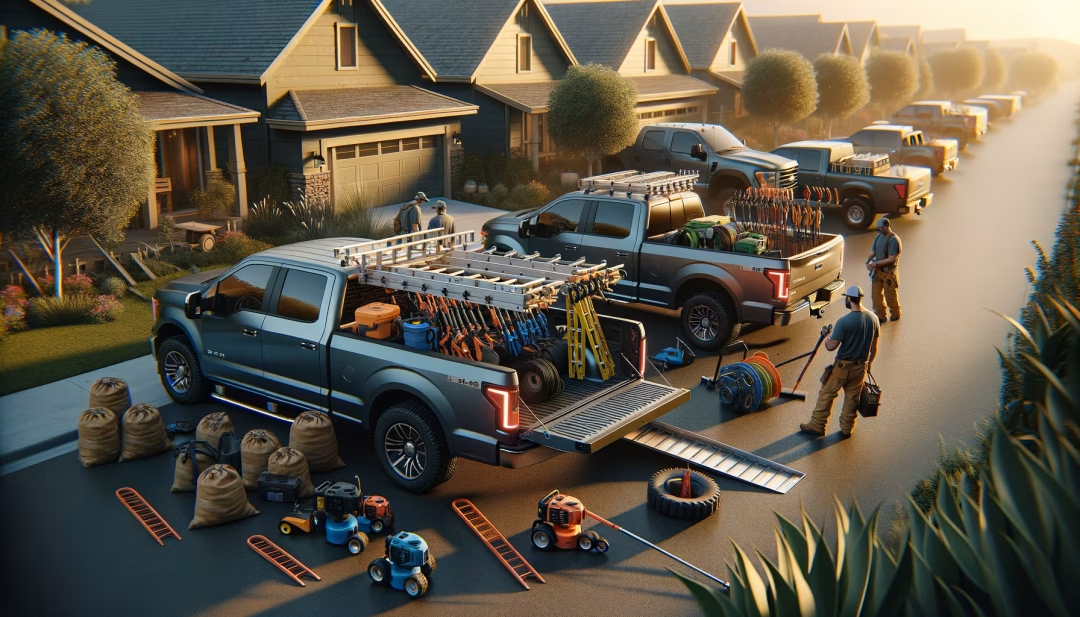
What makes a great landscaping truck
A productive landscaping truck balances capability, maneuverability, and cost of ownership. Consider daily equipment weight, trailer needs, crew size, and tight neighborhood access. Focus on the following:
- Payload rating to safely carry mowers, stone, mulch, tools, and racks
- Tow capacity and integrated trailer brake controller for enclosed or equipment trailers
- Bed length and bed height that fit ramps, pallets, and dump inserts
- Axle ratio and cooling packages to maintain performance on hills and heat
- 4x4 for wet grass, job site access, and winter routes where applicable
- Proven engines and transmissions known for durability and parts availability
- Upfit readiness with wiring access, in bed power, and robust charging systems
Half ton vs three quarter ton vs one ton
Half ton trucks such as Ford F-150, Chevrolet Silverado 1500, Ram 1500, Toyota Tundra, and Nissan Titan handle lighter equipment routes, seasonal mulch, and smaller tandem axle trailers. Many trims can be optioned to tow 9,000 to 12,000 pounds when properly equipped and often return better fuel efficiency in stop and go driving.
Three quarter ton and one ton trucks such as Ford F-250 and F-350, Chevrolet Silverado 2500HD and 3500HD, and Ram 2500 and 3500 are better for daily heavy trailers, skid steers, compact tractors, bulk stone, and dump inserts. Their frames, brakes, cooling, and rear axles are engineered for frequent max load use and rough job sites.
Gas vs diesel for landscaping use
- Gas engines: Lower purchase cost, simpler maintenance, quick warmup for short routes, good for mixed city driving and light to moderate towing
- Diesel engines: High torque for heavy trailers, strong engine life when maintained, better fuel economy under load, ideal for F-250 F-350 and 2500 3500 class trucks
Recommended used truck picks for landscapers
Availability changes often. See used-inventory and sold-inventory for real world examples and recent sales trends.
- Ford F-150 2015 to 2020: 5.0 V8 or 3.5 EcoBoost, excellent tow tech, aluminum body for rust resistance, many bed lengths and cab options
- Ford F-250 Super Duty 2017 to 2020: 6.2 gas for budget heavy duty or 6.7 Power Stroke for frequent max towing, strong frames and PTO friendly builds on select configs
- Chevrolet Silverado 1500 2016 to 2020: 5.3 V8 balance of power and economy, plentiful parts, available trailering package and integrated controller
- Chevrolet Silverado 2500HD 2015 to 2019: 6.0 gas or Duramax diesel, stout Allison transmissions in many diesel trims, ideal for equipment trailers
- Ram 1500 2015 to 2020: 5.7 Hemi V8 for dependable torque, smooth ride for crews, available air suspension to level loads on certain years
- Ram 2500 2016 to 2020: 6.4 Hemi gas or 6.7 Cummins diesel, strong rear axles, proven for dump inserts and frequent towing
- Toyota Tundra 2014 to 2020: 5.7 V8, robust and simple, strong resale value, reliable for light to moderate trailer work
- Nissan Titan 2017 to 2019: Good value, V8 power, often well equipped with utility features at friendly prices
For broader options and model comparisons, explore best-used-trucks, best-used-trucks-for-work, and most-reliable-used-trucks.
Upfits that boost productivity
- Bed protection: Spray-in liners, heavy mats, and tailgate covers to handle ramps and pallets
- Storage: Crossbed toolboxes, side boxes, and underseat organizers for fast access to hand tools and small parts
- Racks: Ladder and trimmer racks to free bed space and improve safety in transit
- Power: Inverter or factory 120V outlets to run chargers and small equipment onsite
- Dump inserts: Convert a pickup into a light dump solution for mulch, soil, and cleanup
For service and installation guidance, see schedule-service. If you plan to tow frequently, see best-used-vehicles-for-towing and used-vehicles-for-hauling for additional configuration tips.
Gear ratios, cooling, and brakes
Axle ratio affects launch feel and towing performance. A numerically higher ratio improves pull at the expense of highway economy. Many factory tow packages add upgraded cooling, alternators, trailer brake controllers, and hitch hardware. Check the door jamb sticker and build sheet to confirm ratio, GVWR, and tow package details. On used trucks, inspect rotors and pads for uneven wear and confirm trailer wiring and 7 pin connectors are functional.
4x4, tires, and seasonal capability
4x4 adds traction on wet lawns, dirt sites, and snow. If your routes include winter contracts or access roads, prioritize selectable 4x4 with a locking or limited slip rear differential. Tire choice matters as much as drivetrain. Highway terrain tires ride quietly and last longer, while all terrain tires improve job site bite. For cold climates, dedicated winter tires greatly improve braking and stability. For more cold weather considerations, see best-used-vehicles-for-winter-driving and best-used-cars-for-snow.
Cost of ownership and reliability
A dependable landscaping truck should minimize downtime. Research known trouble spots by model and year on most-reliable-used-trucks and used-vehicles-with-lowest-maintenance-costs. Gas powertrains often have simpler emissions systems, helpful for short stop routes. Diesels reward consistent maintenance and longer operating temps. Review service records, oil change intervals, transmission fluid changes, coolant history, and any plow or PTO use. Alignment history, ball joints, tie rods, and wheel bearings deserve attention on trucks that carried heavy front accessories.
Inspection checklist before you buy
- Frame and bed: Look for rust at cab mounts, rear frame rails, and bed crossmembers, plus signs of heavy salt use
- Hitch and wiring: Inspect receiver welds, 7 pin connectors, and in bed plugs for gooseneck or fifth wheel setups
- Suspension and tires: Check leaf springs, shocks, airbags or helper springs, and tire load ratings
- Engine and transmission: Confirm smooth shifts, stable temps under load, and no warning lights during a long test loop
- Upfit wiring: Verify clean installs with fused circuits and tidy grounds to avoid parasitic drains
Use the full used-car-inspection-checklist and how-to-check-used-car-history as references. For budgeting and prep, see used-car-buying-checklist.
Budgeting, financing, and trade planning
A solid total cost plan includes purchase price, taxes, insurance, maintenance, and upfit costs. If you will finance, compare terms on payment-options and applications. To estimate equity and upgrade timing, review value-my-trade. For approvals with varied credit profiles, see how-to-finance-a-used-car and can-you-finance-a-used-car-with-bad-credit. Questions about timing or availability can be answered on locations and contact-us.
Cab and bed choices for crews and cargo
Regular cab long bed setups maximize payload and turning radius, great for solo operators and pallet loading. Extended and crew cabs improve seating and interior storage for crews, laptops, and paperwork. A 6.5 foot bed fits many inserts and ramps while a 5.5 foot bed improves maneuverability in tight suburbs. Ladder racks can restore vertical cargo space on shorter beds. When frequent bulk material hauling is required, consider a chassis cab with a proper dump body rather than pushing a pickup beyond its comfort zone.
Tech and safety that help on route
- Surround or bed cameras for trailer hookup and load checks
- Blind spot and rear cross traffic alerts to reduce parking lot bumps
- Apple CarPlay and Android Auto for routing and voice calls with hands on wheel focus
Safety ratings and owner reviews are available on used-cars-with-best-safety-ratings and used-vehicles-with-best-owner-ratings.
Related resources
- best-used-trucks-for-work
- best-used-trucks-under-20000
- most-reliable-used-trucks
- used-car-buying-checklist
- research-page-template
Frequently Asked Questions about Used Landscaping Trucks
Helpful pages
Continue your research with these resources:
Office Hours
Monday
Tuesday
Wednesday
Thursday
Friday
Saturday
9:00 am - 5:00 pm
9:00 am - 5:00 pm
9:00 am - 5:00 pm
9:00 am - 5:00 pm
9:00 am - 5:00 pm
Closed
