
Guide to Years, Trims, and Ownership Tips
If you love capability and character, few brands deliver like Jeep. This guide to the most reliable used Jeep models will help you pick the right SUV or truck for daily driving, weekend trails, and winter weather. We walk through the Wrangler, Grand Cherokee, Cherokee, Compass, Renegade, Gladiator, and more with the years, engines, and trims known for long service life and lower repair risk. You will also learn what to inspect, average maintenance needs, and ownership insights that boost confidence and protect your budget. Ready to compare specific vehicles after you narrow your shortlist We have helpful resources, educational pages, and an up to date inventory to explore anytime. Visit used inventory, read buyer checklists, and learn how to value your trade in minutes.
Reliability in a used Jeep comes from smart model and year selection, proven engines and transmissions, documented service history, and a clean vehicle history report. In this guide we highlight the best used Jeep years to target, known issues to check before you buy, and maintenance tips that keep your SUV or truck running strong. Use the insights below to match capability, comfort, and cost of ownership to your lifestyle.
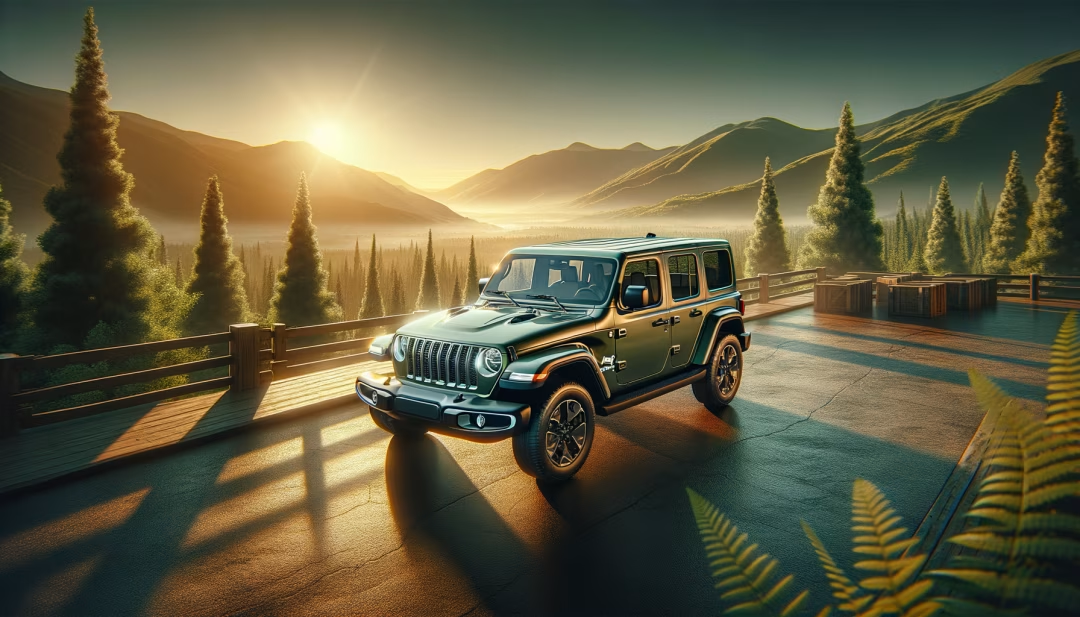
Most Reliable Used Jeep Models and Years
Jeeps pair off road heritage with everyday practicality, but reliability varies by model year, powertrain, and how each vehicle was used and maintained. Below are the models shoppers most often consider, with the stand out years and trims that tend to deliver durability, parts availability, and predictable ownership costs.
Jeep Wrangler: Timeless and Tough
The Wrangler is iconic for a reason. Body on frame construction, solid axles on most trims, and simple drivetrains create a platform that can last with routine care. Reliability often tracks with naturally aspirated engines and conventional automatics or manuals. Look for stock or lightly modified examples that show consistent service records.
- Wrangler JK 2012 to 2018 with the 3.6L Pentastar V6 and 5 speed automatic or 6 speed manual. These years brought stronger power and improved efficiency over the older 3.8L.
- Wrangler JL 2018 to 2020 with the 3.6L V6 or 2.0L turbo, focusing on stock gearing and documented maintenance. Early JL issues were mostly minor software updates.
- Avoid severe rust, heavily cut fenders, or signs of repeated water submersion. Check frame rails, control arm mounts, and differential housings closely.
Jeep Grand Cherokee: Comfortable and Capable
As a midsize SUV, the Grand Cherokee blends ride comfort with trail competence. It offers several 4x4 systems and a spectrum of engines. For reliability, prioritize proven powertrains and clean electrical history.
- WK2 2014 to 2019 with the 3.6L Pentastar V6. These years benefited from transmission and infotainment refinements.
- Seek Quadra Trac II or Quadra Drive II for strong all weather traction. Air suspension adds comfort but increases complexity; verify function and prior repairs.
- For towing, the 5.7L V8 is stout. Confirm maintenance and cooling system health, and inspect for exhaust manifold tick.
Jeep Cherokee: City Friendly Size, Confident in Weather
The KL generation Cherokee brings a car like ride with traction tech for snow and light trails. Reliability improves when you pick the right engine and service history.
- 2016 to 2019 Cherokees with the 3.2L V6 and 9 speed automatic tend to be more robust than early 2014 to 2015 calibrations.
- Trailhawk trim offers better approach and departure angles and a locking rear differential. Inspect skid plates and underbody for impact scrapes.
Jeep Compass: Efficient and Straightforward
The Compass is a good pick for commuters who face winter weather. Later second generation models earned notable reliability gains and cabin upgrades.
- 2019 to 2021 Compass with regular maintenance records. Look for 4x4 with Selec Terrain for snow and gravel confidence.
Jeep Renegade: Compact Footprint, Big Personality
The Renegade is easy to park and fun to drive. Reliability is sensible when maintenance is consistent and software updates are current. Trailhawk versions add ground clearance and improved traction features.
- 2017 to 2020 Renegade with a complete service file. Check for timely oil changes and cooling system health on turbo engines.
Jeep Gladiator: Truck Utility with Jeep DNA
The Gladiator uses Wrangler architecture with a pickup bed. Early years are generally solid, with the 3.6L V6 as a proven choice. Inspect the bed for heavy use and the frame for accessory mounts or hitch wear from towing.
- 2020 to 2022 Gladiator Sport or Overland with documented fluid services. Rubicon adds off road hardware; confirm differential and transfer case fluids were changed on schedule.
Older Value Picks: Patriot and Liberty
Budget minded buyers may find low mileage Patriots or late model Libertys. Reliability hinges on prior care. Focus on examples with conservative use and clear records, and confirm 4x4 engagement is smooth without noise.
Best Jeep Engines and Transmissions for Longevity
Certain powertrains are known for high mileage potential when serviced on time. Choosing these combinations can reduce risk and improve parts availability and cost control.
- 3.6L Pentastar V6: Found in Wrangler, Grand Cherokee, Gladiator, and more. Known for balance of power and reliability. Listen for startup tick and check for oil cooler leaks; both are well known and fixable.
- 5.7L Hemi V8: Strong tow friendly option in Grand Cherokee. Inspect for cooling health and exhaust manifold bolt issues. Proper maintenance supports long service life.
- 2.0L Turbo I4: Efficient and torquey in newer Wrangler and Cherokee. Verify software updates, cooling system integrity, and high quality oil change intervals.
- 5 speed automatic in JK Wrangler and 8 speed automatics in later models are generally durable with fluid and filter changes. Avoid neglect and overheating.
What to Inspect on a Used Jeep
Jeeps are often accessorized and used off pavement. Careful inspection helps you separate enthusiast maintained vehicles from hard used examples.
- Frame and underbody: Look for rust, scrapes on skid plates, bent control arms, and seepage at differentials and transfer case.
- Steering and suspension: Check ball joints, tie rods, track bar bushings, shocks, and alignment. Road test for wander or vibration at highway speed.
- 4x4 system: Confirm smooth engagement of 4 High and 4 Low on models so equipped. Listen for binding or grinding on tight turns in a parking lot test.
- Electrical: Test Uconnect, cameras, power seats, and window regulators. Inspect for aftermarket wiring quality and fused power to add ons.
- Modifications: Leveling kits, oversize tires, or axle gear changes affect drivability and wear. Favor professionally installed parts with receipts and alignment sheets.
Ownership Costs and Maintenance Tips
A reliable used Jeep is one that continues to receive the right fluids, filters, and inspections. Follow the maintenance schedule in the owner manual and adjust for heavy use, towing, or dusty trails. Many Jeeps use serviceable driveline fluids that extend component life when changed on time.
- Engine oil: Use the specified grade and change more frequently if you drive short trips, tow, or wheel in hot conditions.
- Transmission and transfer case: Periodic fluid changes reduce heat wear. Ask for records or plan preventive service after purchase for peace of mind.
- Differentials: Fresh gear oil protects bearings and ring and pinion sets, especially on 4x4 vehicles that see snow, mud, or towing.
- Cooling system: Keep coolant fresh and the radiator clear. Overheating shortens engine and transmission life.
Best Trims and Packages for Reliability
Trim choice affects complexity and long term costs. While luxury features are appealing, additional air suspension components, power equipment, or panoramic roofs can raise ownership risk if neglected. Balance features with simplicity for the best reliability outcome.
- Wrangler Sport or Sahara with standard suspension is a simple, durable baseline. Rubicon adds capability with lockers and stronger axles; confirm fluid service and careful use.
- Grand Cherokee Laredo or Limited with the 3.6L V6 offers a strong reliability to feature ratio. If you choose air suspension, verify full system health.
Mileage Expectations and Lifespan
Well maintained Jeeps commonly pass 150,000 miles and many reach 200,000 miles or more. Lifespan depends on rust prevention, timely fluid changes, and how often the vehicle tows or goes off road. A higher mileage Jeep with complete records can be a smarter buy than a low mileage example with gaps in maintenance history.
How Jeep 4x4 Systems Impact Reliability
Jeep offers several systems designed for different uses. Part time systems like Command Trac are durable and simple. Full time systems like Quadra Trac II and Quadra Drive II improve traction with more hardware. Simpler systems reduce complexity, while advanced systems reward owners who maintain fluids and seals on schedule.
Helpful Resources
Compare models, learn financing basics, and review safety and reliability research with these in depth pages.
How to Choose the Right Used Jeep for Your Needs
Start with your daily routine. If you commute in traffic, a Cherokee or Compass with driver aids and quiet highway manners may fit best. If you plan frequent trail days or camping, the Wrangler or Gladiator brings approach angles, articulation, and modular accessories. For family trips and towing, the Grand Cherokee balances comfort, power, and safety tech.
- Daily driving and snow: Compass, Cherokee V6, or Grand Cherokee V6 with all wheel traction features.
- Weekend off road: Wrangler Sport or Rubicon with mild, quality upgrades and stock gearing that matches tire size.
- Towing and road trips: Grand Cherokee V6 or 5.7L V8 with cooling package and safety features. Confirm service history and brake life.
Pre Purchase Checklist
Before you buy, gather a vehicle history report, review service records, and complete a thorough test drive on city streets and highway. Engage all drive modes, test climb a modest hill if safe, and check for leaks after the drive. If possible, schedule a pre purchase inspection with a technician experienced in Jeep 4x4 systems.
- Verify recalls were addressed and scan for codes even if the check engine light is off.
- Check tire date codes and even tread wear. Uneven wear can point to alignment or suspension issues.
- Look for water marks inside doors and carpets, especially on removable top Wranglers.
Frequently Asked Questions
Explore More and Continue Your Research
When you are ready to compare specific vehicles, browse current availability, check values, and schedule time behind the wheel. You can also learn about financing options, extended protection, and ownership tips that make your next Jeep purchase smooth and informed.
Office Hours
Monday
Tuesday
Wednesday
Thursday
Friday
Saturday
9:00 am - 5:00 pm
9:00 am - 5:00 pm
9:00 am - 5:00 pm
9:00 am - 5:00 pm
9:00 am - 5:00 pm
Closed
